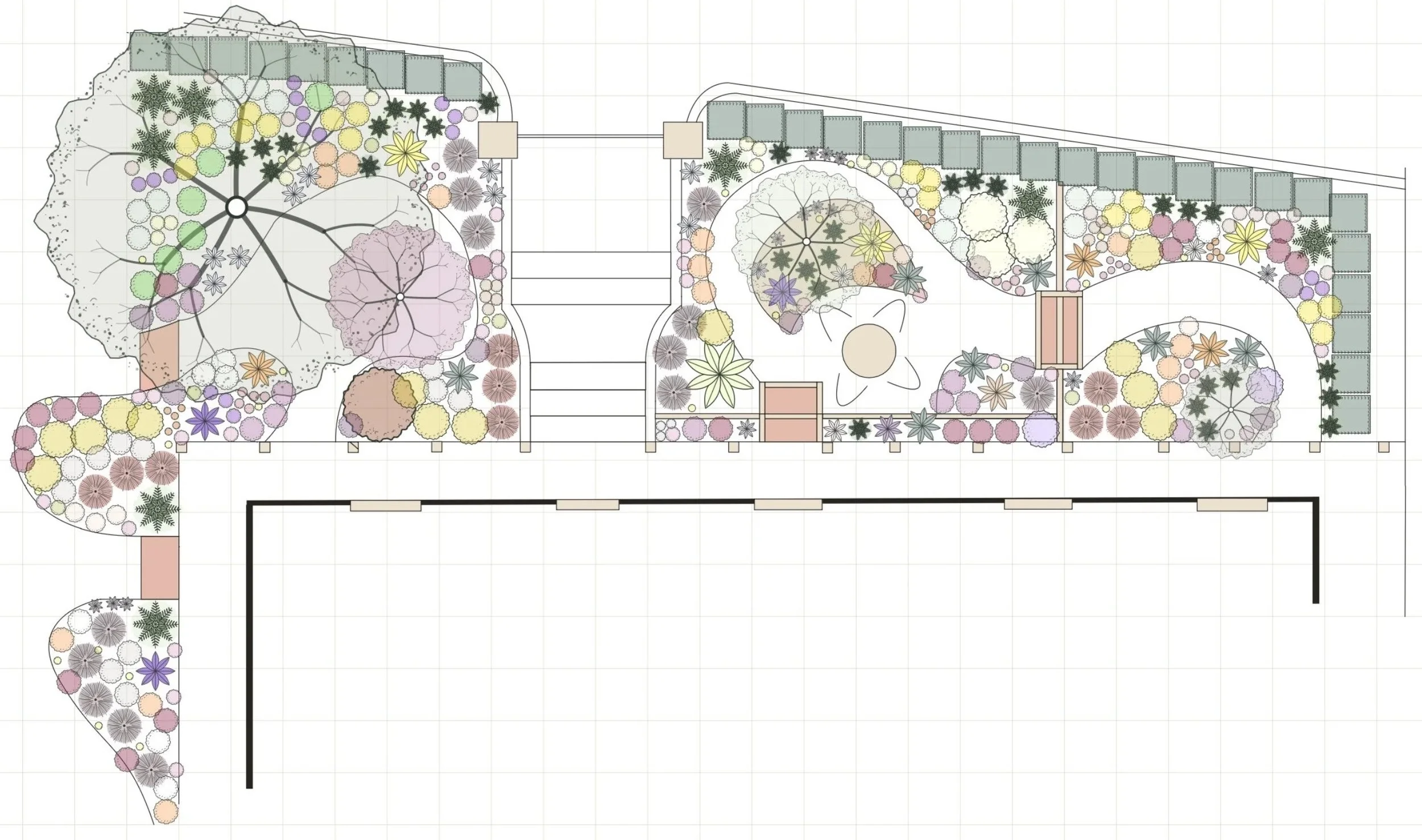
Design by Janine Joyce in AsterSketch
Beautifully Resilient
Garden Design
Planting Design by Janine Joyce in AsterSketch
We
are
all
shaped
by experience
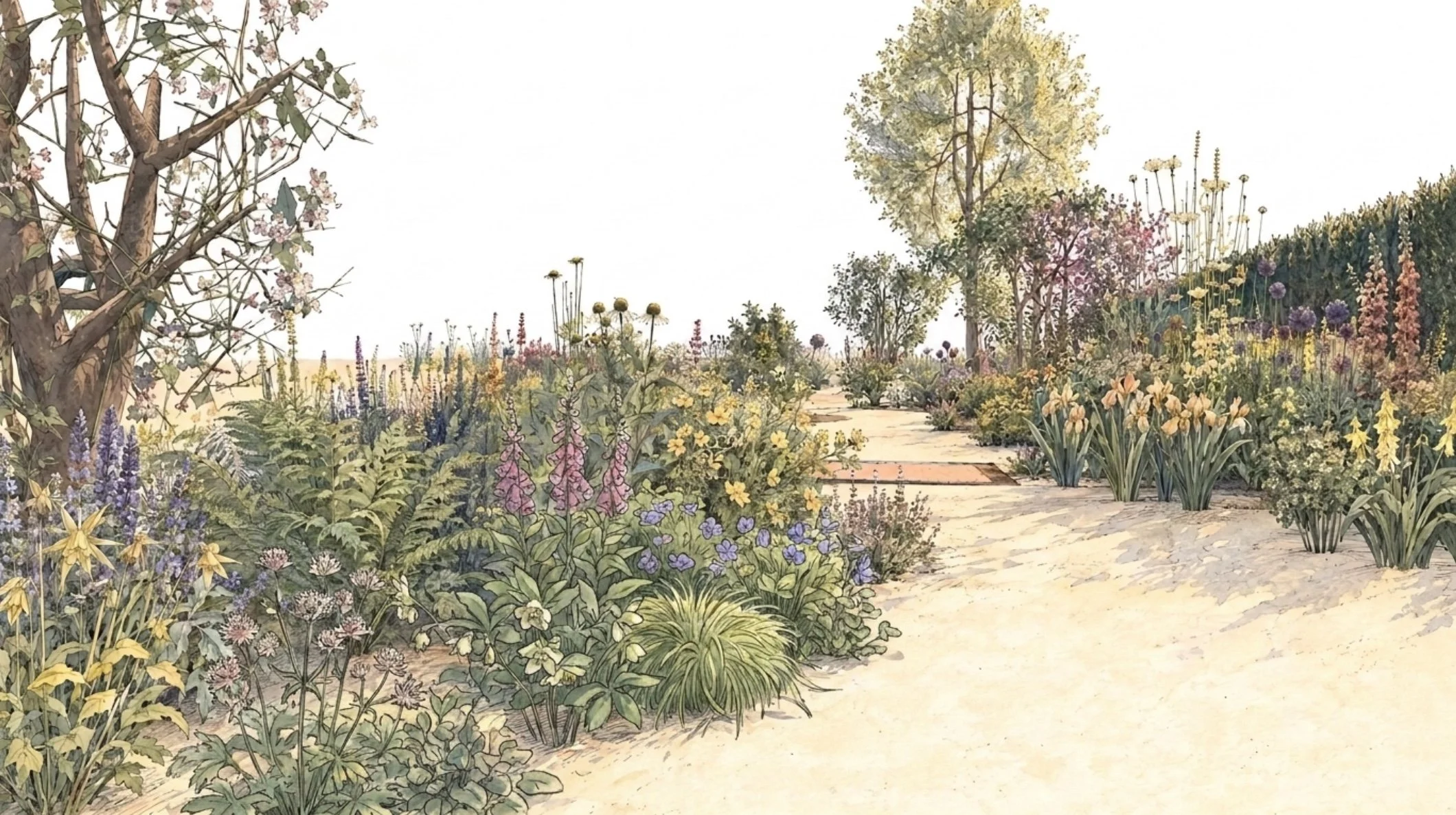
Front garden, Bury St Edmunds, designed by Janine Joyce in AsterSketch
Design Process
Every natural space has evolved uniquely and deserves to be treated with respect.
At the beginning of the design process, all aspects of the garden are closely observed, including its topography, soil, aspect and existing plants, and new ideas evolve in harmony with these observations. Alongside this, Janine listens carefully to the clients, to their needs and ideas for the garden, as well as its history and their emotional connections to the space. Thoughtful and considered garden designs grow out of this process which work with both the environment and the people using the garden.
Taking inspiration from nature, this aesthetic is then artfully designed to evoke atmosphere and create an immersive natural space.
We
are all
shaped by
experience
Front Garden, Bury St Edmunds, designed by Janine Joyce in AsterSketch
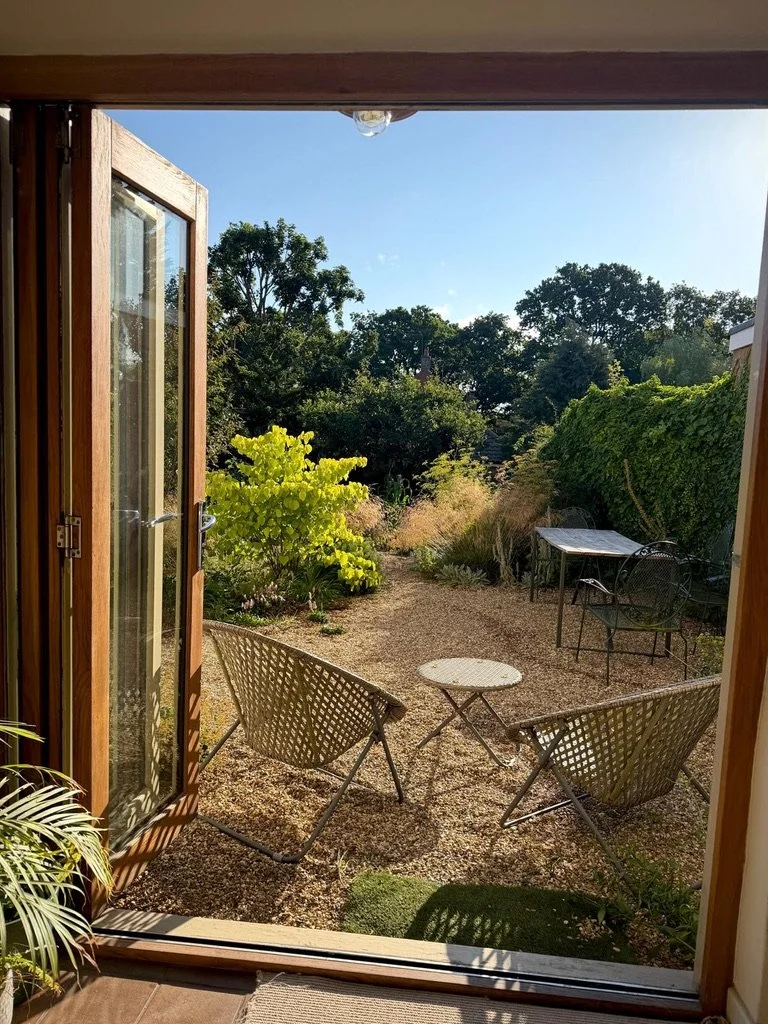
Gravel garden, Wenhaston, Suffolk
Gravel garden, Wenhaston, Suffolk
Resilience and Biodiversity
Janine Joyce Garden Design is passionate about creating gardens which are biodiverse and provide maximum benefit to the wildlife with whom we share our space. Equally important is an endeavour to create a resilient planting palette for our changing climate. Janine meticulously researches and matches plants to soil, aspect and environment to strive for resilience and longevity, as well as keeping up-to-date with new findings in the field. Wherever possible, existing materials onsite are repurposed and healthy trees are retained.
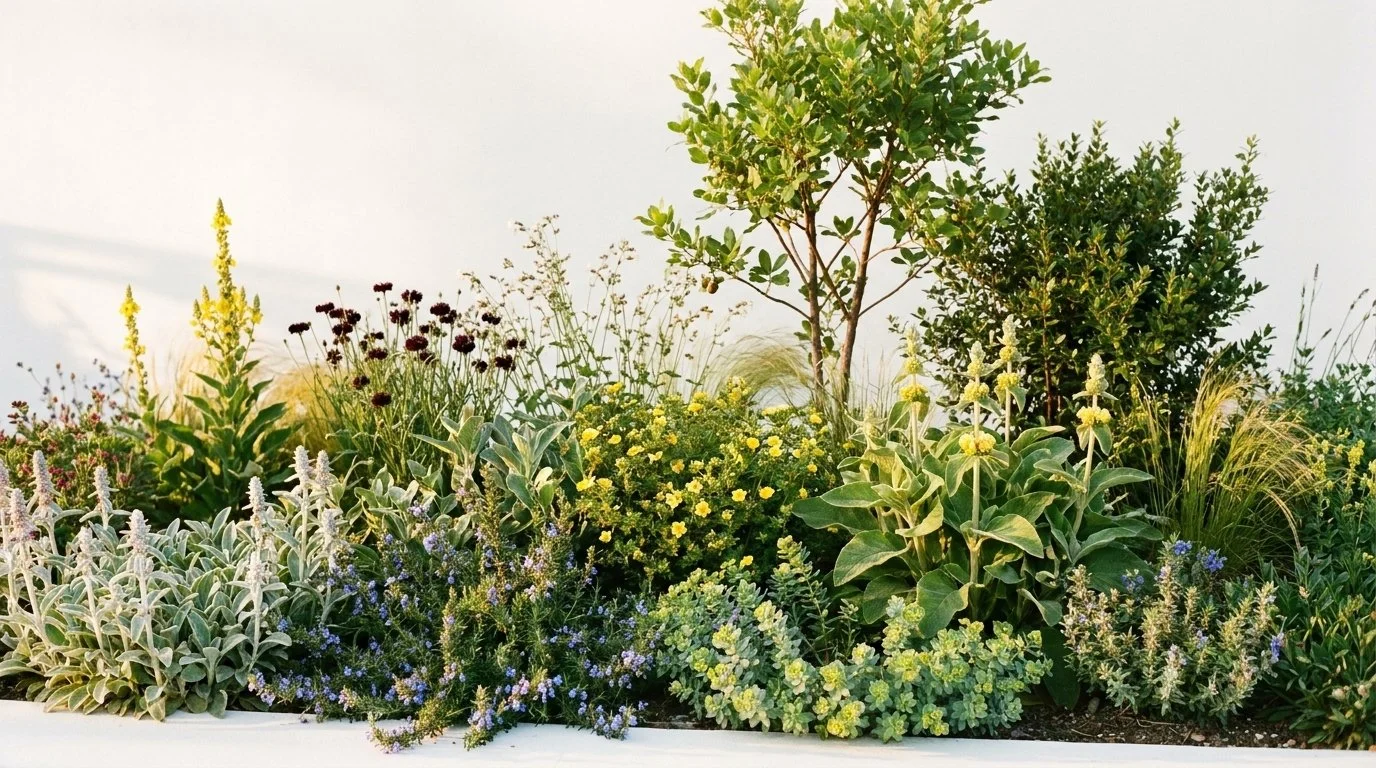
Plant palette carefully selected by Janine is visualised as a group in AsterSketch
Mixed Planting Style
Janine favours a mixed planting style.
Climate resilience - mixing different plant species into one space is more resilient as a whole in the face of changing weather patterns and increasing temperatures.
Biodiversity and soil health - mixed planting supports and improves the soil microbiome, attracts pollinators and helps to handle heavy rain. A highly diverse plant palette fills the soil with beneficial organisms making it harder for harmful diseases to take hold.
Multi-layered tapestries - the design is anchored year-round by vertical and structural elements, including evergreen trees or shrubs where possible. Even in small spaces, trees are celebrated, and can be chosen for their multi-stems, blossom, fruit or stunning foliage colour. Other vertical accents could be added by standing dead wood and tree branch sculptures or weathered driftwood, to create mesmerising organic art as well as habitat for insects.
Texture - An aromatic and textured layer is then interwoven with different foliage shapes, textures and colour tones to create a living tapestry of plants. Weaving together the layers, and creating a contrast with delicate, airy or architectural leaves, are grasses and ferns. Vibrant ground cover suppresses weeds and retains moisture. Carefully selected native wildflowers add a delicate beauty and resilience. Self-seeders allow for an ever-evolving, naturalistic look.
A dynamic, evolving, beautiful community of resilient plants is created
breathing life into your garden and your soul.
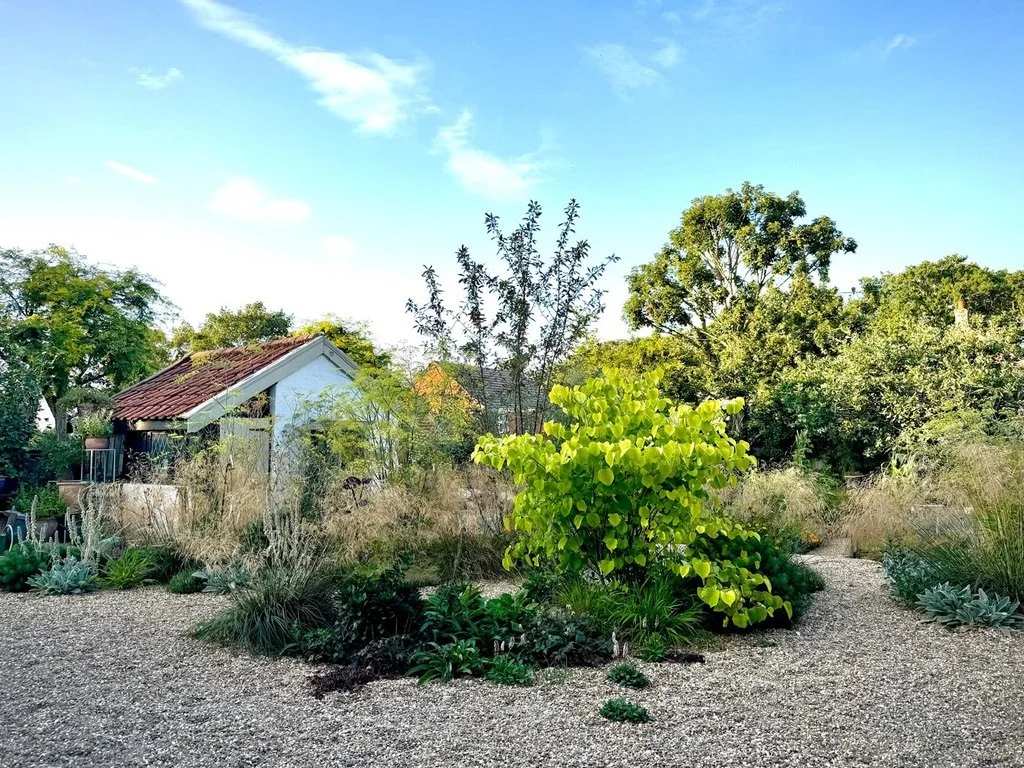
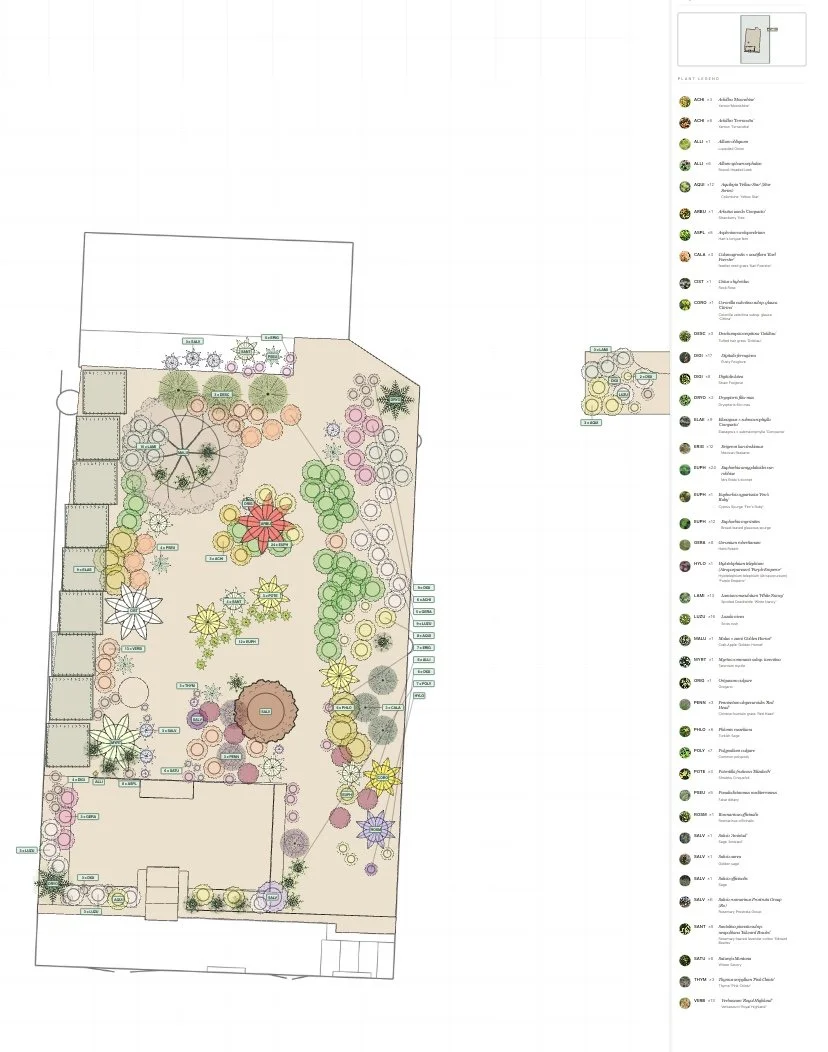
The design of Janine’s evolving experimental dry garden in East Herts, which includes Mediterranean flowering shrubs, herbs and native wildflowers, with gravel and sand as a top layer to lock in moisture during periods of drought and prevent root rot during wet winters. Follow progress on Instagram @janinejoycegardendesign
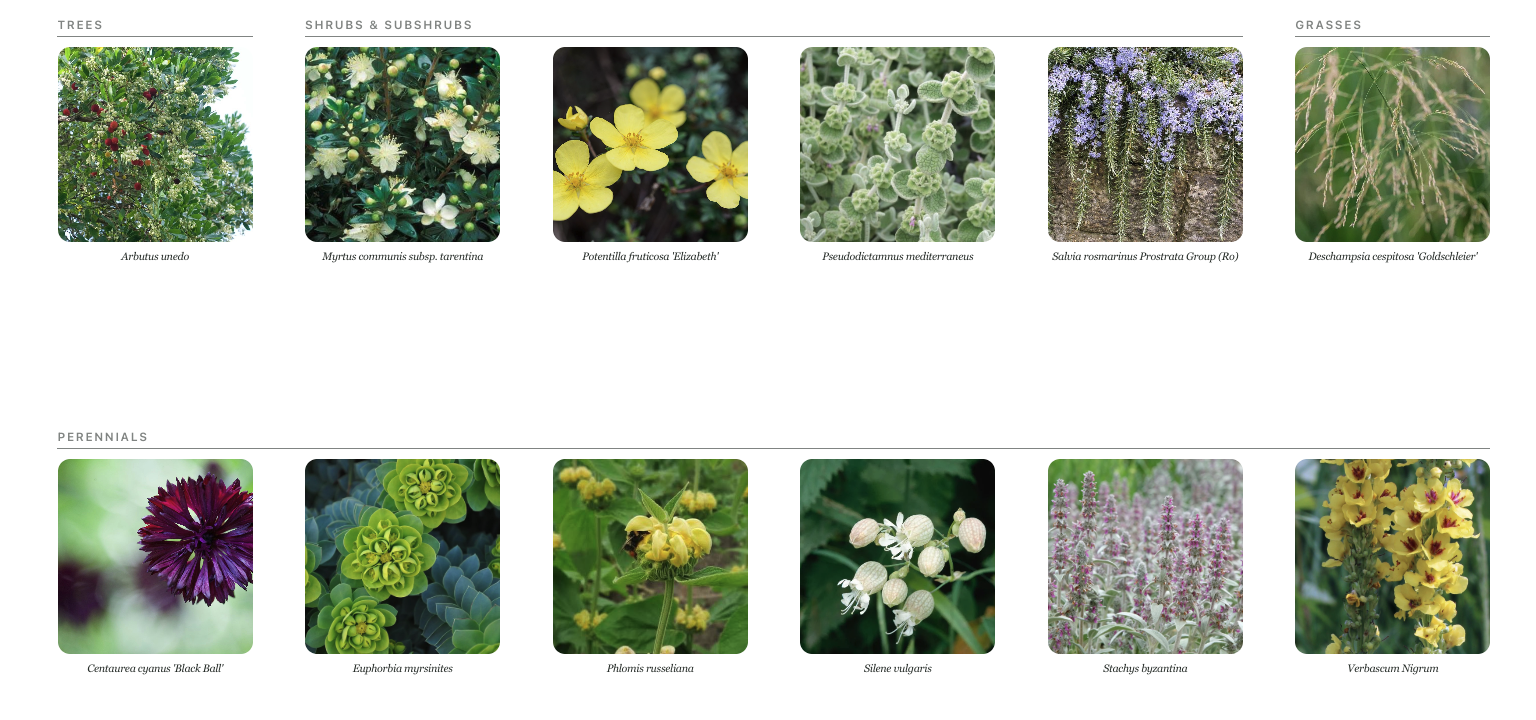
Mood board of planting palette created in AsterSketch